The Sound We Carry | Living Topography#
05 November 2026 | Meeting № 6 | agirE CLDS 5G, Esposende
There are sounds we create ourselves. And there are those we receive from others and pass on.
But do we always listen carefully enough to preserve what the person who created that sound intended to convey?
This time, our theatre workshop was dedicated to the voice, breathing and sound interaction. We explored how a sound is born, how it travels through space, how it changes as it passes from one person to another, and how something shared can emerge from many individual voices.
Starting with Breathing#
As usual, we gathered in a circle.
Before working with our voices, we needed to pay attention to our breathing. Not to try to make it correct or identical for everyone, but simply to feel our own natural rhythm.
Then we began releasing the air with the sounds S, V and Z, listening to their duration and sensing how air turns into sound.
Gradually, the whole body became involved. We warmed up our voices through humming, felt the vibration in our lips and faces, opened up our voices to vowel sounds, and combined them with movements of our arms, legs and torso.
The voice was no longer simply a means of speaking words. We began to experience it as part of our physical presence.
An Echo Travelling Through Space#
One of the exercises that stayed with me took place in the large auditorium.
We split into two groups and positioned ourselves facing each other at a considerable distance. Each participant had to invent a sound and pass it on to someone else.
But this was not simply about repeating what we heard.
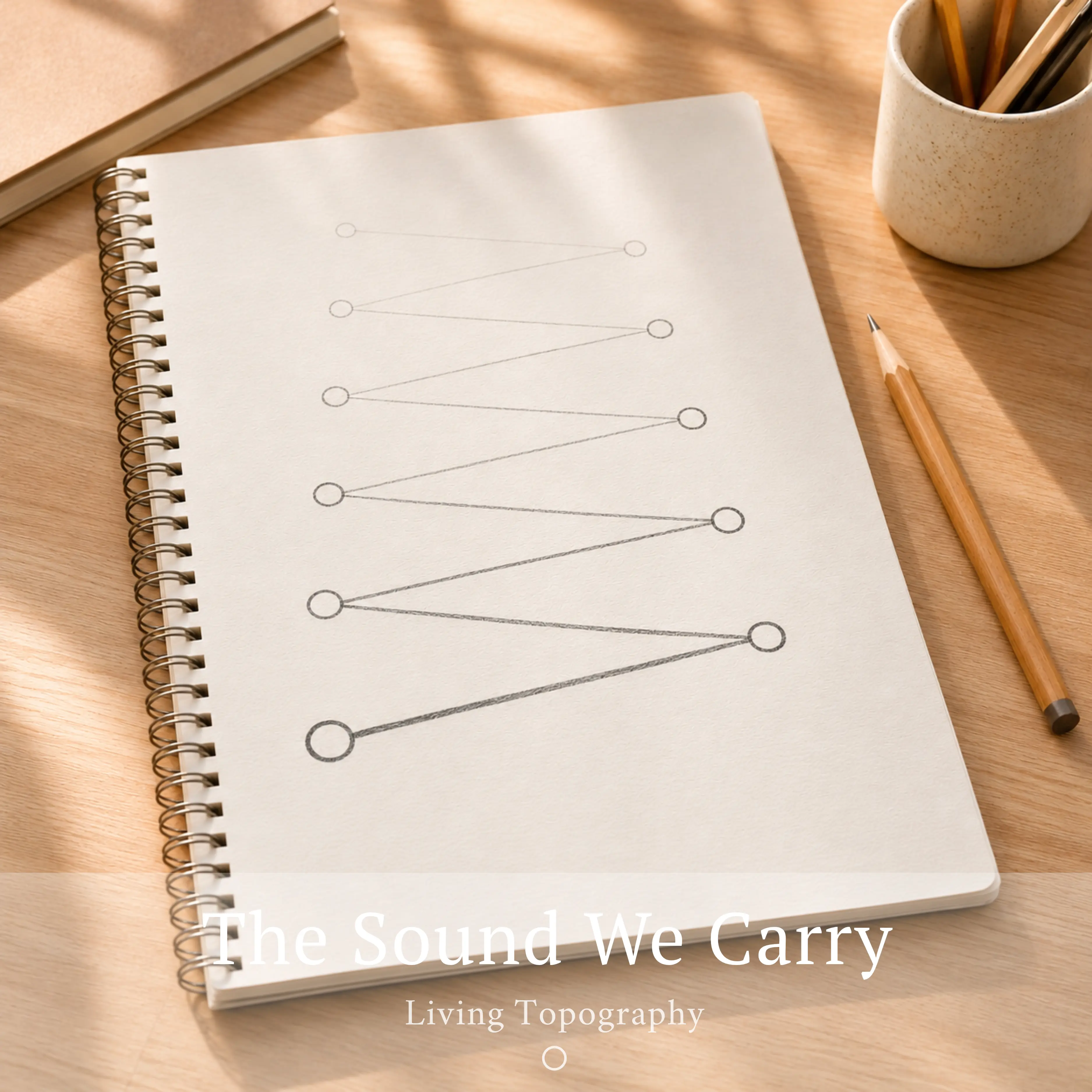
The first participant made the sound quite loudly. The next reproduced it a little more quietly, the following one even more softly. The sound travelled from one person to another, moving in zigzags across the room, until the last participant made it almost inaudible.
Then we repeated the exercise with different sounds.
It was especially enjoyable to pick up someone’s bright little “meow” and pass it on, noticing how it gradually faded without disappearing completely.
What interested me in this exercise was not just the echo itself, but what was happening between the participants.
To pass on someone else’s sound, we first had to listen carefully. Not merely catch its general character, but try to reproduce exactly what had been created at the beginning.
We were not supposed to invent our own version, embellish what we heard or add our own interpretations. We had to preserve the original intention.
It reminded me of the game of Chinese whispers, but with the opposite objective. Instead of allowing a message to change as it travels, we were trying to prevent that from happening.
I realised that this applies to more than just sounds. We pass on one another’s words, thoughts, stories and creative ideas all the time. Sometimes, without even noticing, we add something of our own and alter the original meaning.
But not every interaction requires us to add something. Sometimes the most valuable thing we can do is listen carefully to another person and avoid distorting what they intended to communicate.
When Sounds Create an Entire World#
The next exercise brought us together in two groups again.
This time, each group had to create its own soundscape. First, we had to present it using sounds alone, without any movements. The other group watched and tried to work out what was happening.
Then we added movements, making the idea easier to understand.
Our group created a zoo.
Each of us chose a role — a wild animal or a bird — and reproduced its characteristic sounds. Together, we created an entire space filled with different voices and movements.
But the other group exceeded all expectations. They created a hospital!
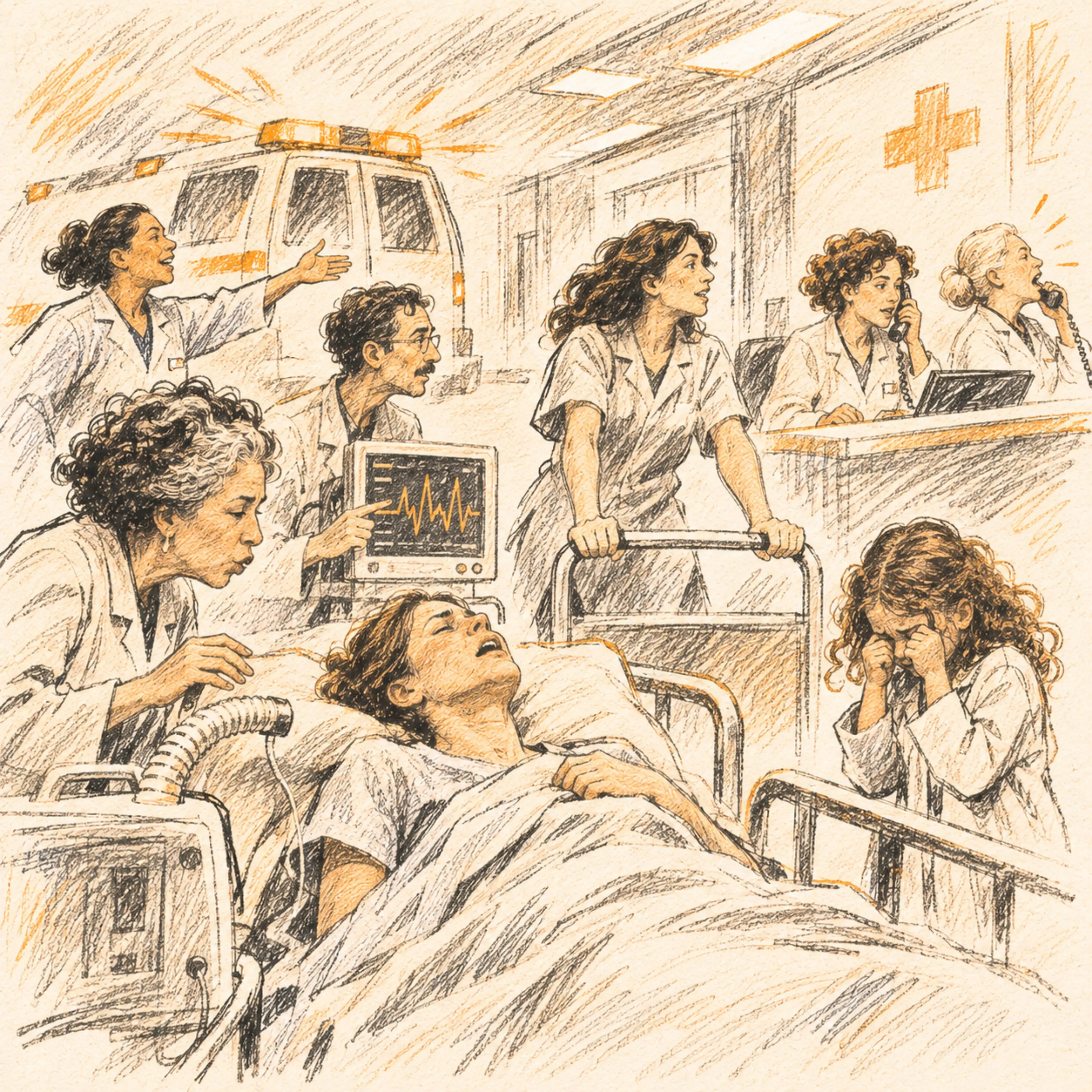
There was a patient struggling to breathe, a breathing machine, a monitor displaying the patient’s pulse, a nurse moving around with a trolley, a receptionist answering the phone, a phone that kept ringing, a little girl playing a relative and crying, and an ambulance arriving with its flashing lights on.
It was incredible!
Each participant reproduced a separate function, but together they created a complete scene that could be recognised and understood.
It was particularly interesting to watch how an initially incomprehensible collection of sounds gradually turned into a recognisable environment once the movements were added.
Nobody could have created that picture alone. It emerged because everyone contributed something while leaving room for the others.
We were not simply imitating sounds. We were creating an interaction.
My Own Voice Among Many#
At the end of the session, we returned to the circle.
One of the tasks was to prepare a word that we could say aloud, with the other participants picking it up and returning it to us as an echo.
I chose the word Yahoo!
For me, it is associated with more than just an exclamation of joy. I was once struck by the name of the company itself. It seemed so cheerful, positive and full of hope. Like a breath of fresh air or a sudden burst of emotion.
I like the fact that even a single short word can have its own story and evoke a very specific feeling.
The other participants’ words were different too. Each had its own character.
Perhaps that is what makes human voices so special: they can sound together without having to become identical.
The Sound We Carry#
After this session, I found myself thinking about what it means to carry someone else’s voice forward.
We tend to think of interaction as an exchange in which everyone adds something of their own. But this time, I experienced another side of it.
Sometimes, we need not to add, but to preserve.
Not to replace someone else’s intention with our own interpretation. Not to try to make it better according to our personal taste. Not to take ownership of something that originally belonged to someone else.
That requires attentiveness. It requires a willingness to listen, receive and pass something on.
And at the same time, it does not mean giving up our own voice. Once we have carefully passed on what belongs to someone else, there is still room for our own voice to be heard.
Perhaps this is how genuine interaction comes into being: when everyone retains their individuality while helping others to be heard.
The Sound We Carry is not just the sound we pass on. It is also the responsibility we take for what we carry forward.
P.S.#
Sometimes, the best way to be heard is to learn to listen first.
Alt-text 1:
A still life of an open spiral notebook on a wooden desk, with a pencil-drawn zigzag echo diagram. Seven pairs of circles are connected by alternating lines, gradually fading towards the top, representing a sound passed from one person to another while preserving its original character.
Alt-text 2:
A lively charcoal and graphite sketch with warm orange accents depicting a hospital scene created through theatrical improvisation. Eight participants portray a female patient struggling to breathe, a breathing machine, a heart monitor, a nurse with a stretcher, a receptionist answering a phone, a ringing telephone, a little girl crying and an arriving ambulance with flashing lights. All roles are performed by people, creating a humorous and imaginative collective scene.
Living Topography. The Sound We Carry. AP | Pivtorak.Studio. 05.11.2026
© Anna Pivtorak (Kostyuk)
Facilitator’s Note
The session was facilitated by Hugo Dias, who kindly shared his preparation notes for this meeting.
The planned activities may be adapted to the group and to the moment.