Emigration: Responsibility for the Future | Life Reconfigured#
Not waiting until it is too late
Our life was in Kyiv. Our home, work, children, familiar routines, and plans that never included emigration were all there. We were not packing suitcases or looking for another country. But on 24 February 2022, the war entered our lives not through news reports or air-raid sirens — we woke up to explosions.
Eventually, we had to make a decision we had never anticipated: wait or leave our home. I did not know what awaited us along the way, how we would be received, or what difficulties we would have to face. But I knew exactly where we were going: I was taking the children to a safe place — as far away from the war as possible.
And I understood one thing clearly: while there was still an opportunity to act, we could not postpone the decision. Especially when the lives and health of our children were at stake.
Kyiv. A Life We Had Never Planned to Leave#
My husband and I were born in Kyiv. We lived there, worked there, raised our children, and built our lives.
When the full-scale invasion began, I was working as a financial director, and my husband was running the company. We had five children, two dogs, an apartment, our familiar daily routines, and professional commitments. Nothing that would have made us look for another place to live.
We had not prepared for emigration. We had no relocation plans and were not looking for a country in which to start over. Our future was tied to Kyiv.
24 February. War Outside the Window#
We woke up not to air-raid sirens, but to explosions. I believe it was around 4:30 in the morning.
During the first few days, my husband and I slept in shifts. Whoever was awake stayed beside the television, which ran around the clock. We listened to the news, tried to understand what was happening, and waited for explanations.
We could not understand why the president was nowhere to be seen. I believe he appeared on television only on the fourth day. But by then, it no longer mattered to us. We did not listen to him, just as we had not listened to him before.
I was angry with this government. I believed the country had not been prepared for war, and that the decisions made before the invasion had done little to create a sense of readiness for the danger ahead. This was my personal view, which had taken shape even before we began considering leaving.
The children slept in their own beds, but they were already dressed. We never woke them to take them down to the bomb shelter.
What was a bomb shelter in our Ukrainian apartment block? An ordinary basement. Cluttered, with stale air, no proper ventilation or water. The residents had cleared it out and put chairs there for elderly people. But even after that, it remained a place where staying could be more dangerous than remaining in the apartment.
I did not want our children to see that basement and have to endure that experience as well. So even during the explosions, we all stayed in the apartment, moving into the hallway — a safer place.
For the children, the war began in our apartment. We even invented a game called “Hug Time!” — and hugged each other as often as we needed to.
Our dogs’ behaviour changed too. Our German Boxer, our older girl, and our French Bulldog, our younger boy, spent almost all their time lying quietly in their shared favourite spot. They trembled, listened intently, sometimes lifted their heads, and then curled up together again.
They did not bark. They did not demand attention. They were simply there, trying not to get in our way.
The shops emptied. Only after a few days did rumours begin to circulate that bread had arrived. It was being sold for cash.
We had long been accustomed to paying by card, including using interest-free credit. Now this had become an inconvenience we had never thought about before.
We bought mostly bread. We prepared meals from the food we still had in the freezer.
Meanwhile, people began organising themselves. Some joined the territorial defence forces, some went to the front, and others packed their belongings and left Ukraine.
We watched people with suitcases from our window. We did not quite understand where they were going or how they had found the courage to leave.
We were not ready yet.
The Decision. What Are You Holding On To?#
One day, my brother called from America. He told me that his Baptist friends were organising the evacuation of people to safer places.
His wife and daughter had already left.
Now he was offering to help us.
My brother insisted that we needed to go abroad while it was still possible. He knew how his own family’s evacuation had unfolded and told us that volunteers were meeting people at the borders, providing food, clothing, and essential supplies.
When we hesitated, he said:
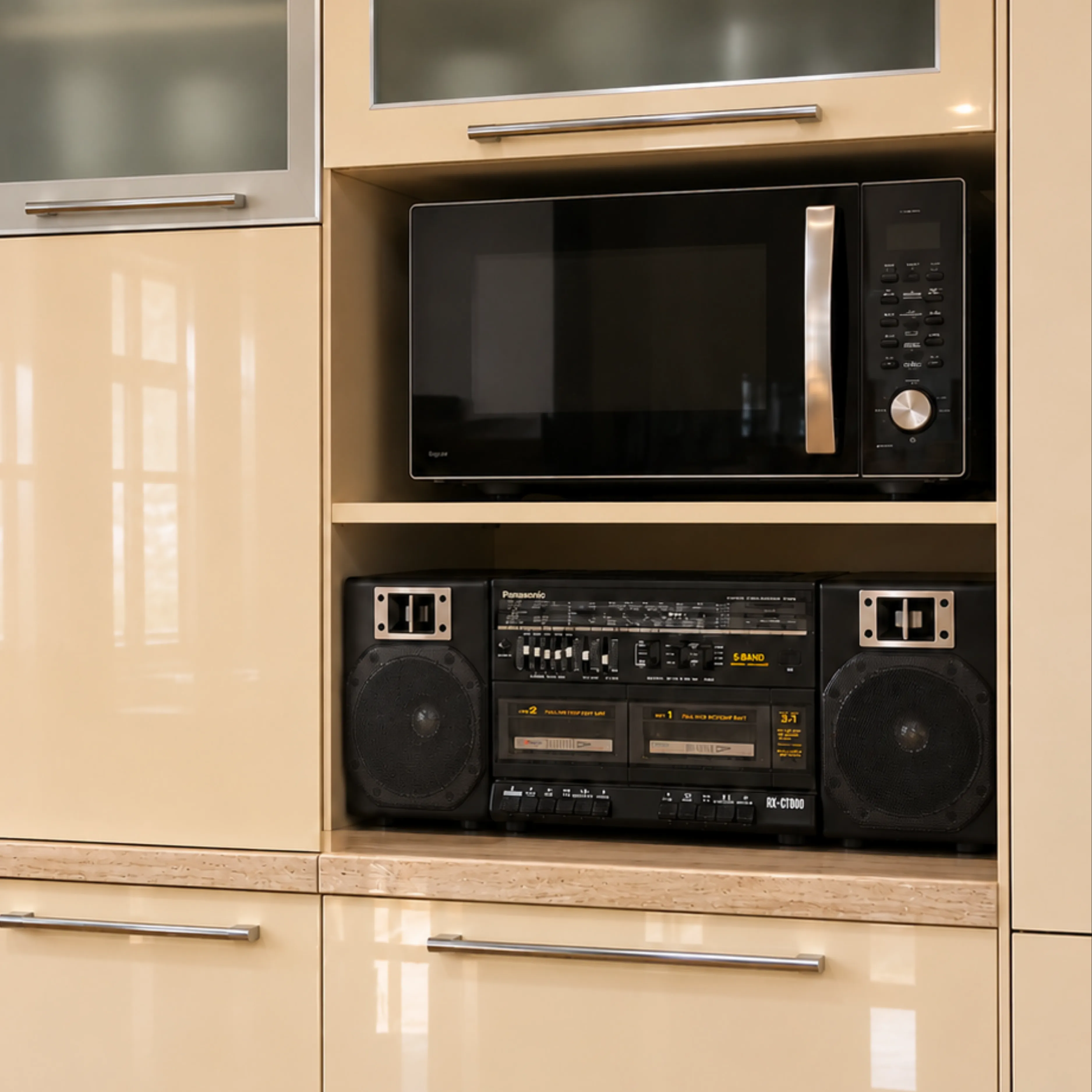
“What are you holding on to? An old tape recorder?!”
The tape recorder really does exist. We bought a Panasonic double cassette recorder shortly after our wedding, in 1995. By 2022, it was already 27 years old, but it still worked.
My brother used it as a symbol of our attachment to things we might consider important, but which should never take precedence over life itself.
He continued:
“You only have one life. And it passes quickly. How much longer do we have left to live? Not that much. And the war could drag on for another 30 years.”
And another thing he said stayed with me:
“Just look at us — we were born. That means our ancestors knew how to survive.”
I was already leaning towards leaving. But I still had to convince my husband.
There was another moment, one I had not spoken about before.
Against the background of explosions, news reports, thoughts, and conversations, a frightening image kept coming to me. I could almost see one of our younger daughters, physically disabled by the war. She was looking at me and asking:
“Mum, didn’t you have a chance to do something?”
It was not a real conversation. It was an image of a possible future in my mind.
And I did not want to let that image ever become reality.
I could not stop the war. I could not guarantee the safety of the entire country. But I could try to get my children out of the war zone while I still had the opportunity.
That was when I decided to act.
My husband spent the night thinking it over. In the morning, he put forward his counterarguments. He was not convinced that we should leave everything we had built behind and start our lives somewhere else.
I answered him more or less like this:
“This is temporary. Imagine that we are being sent abroad for an internship. When we return, we will have international experience and will be worth more as professionals.”
After that, my husband asked for one day to move all his work from the rented office back home.
The decision had been made.
What to Take With Us#
We did not hesitate over what to pack.
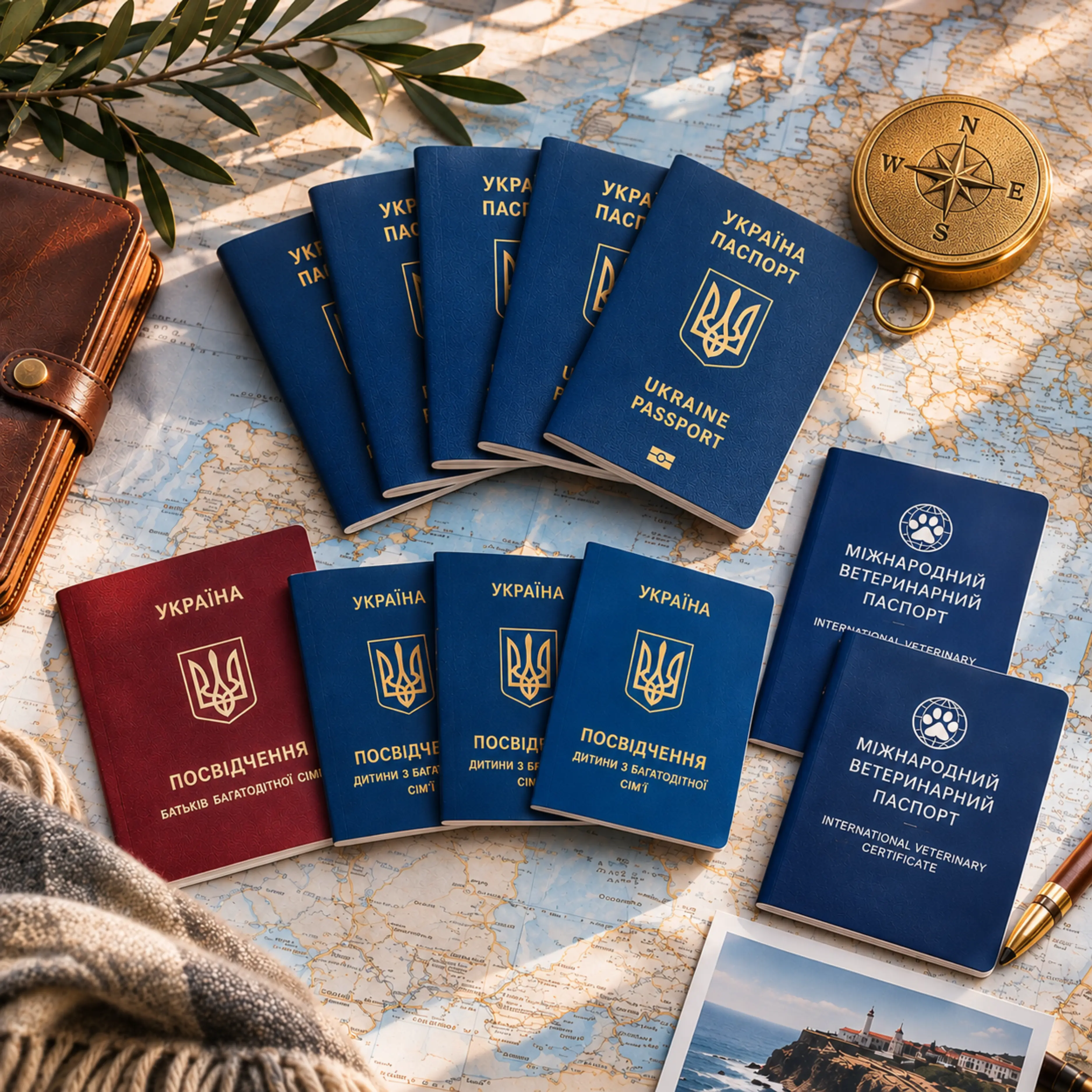
I was responsible for the documents. My husband took care of the backpacks. Nothing unnecessary.
Each of us had a small backpack with personal belongings. The children and our two dogs were coming with us.
I also took my jewellery.
My grandfather had lived through a war. Once, when I visited him in Kuban, I was wearing a lot of silver jewellery. He reproached me for it, recalling that during the war people had to exchange jewellery for a loaf of bread.
I answered him rather quickly:
“At least I’ll have something to exchange for bread.”
My grandfather said nothing.
Many years passed. And now I had found myself facing war.
I took the jewellery with that very thought in mind: if necessary, I could pawn it and get money for food or other essentials.
In my mind, I had already accepted that I might have to part with it.
These were not things I intended to hold on to at any cost. At that moment, they were a potential resource for survival.
The Journey Begins#
On 4 March 2022, we left Kyiv.
We were travelling very fast, with an “EVACUATION” sign displayed on the minibus, which meant that special rules applied to us. Our family was seated in the back row.
Our fourth child was eight years old at the time. She kept feeling sick. We were afraid of disturbing the other passengers, so we quickly hid the soiled clothes in bags. She only began to feel better when she managed to fall asleep.
Vinnytsia was our first stop. We washed our clothes. We were given a meal at a House of Prayer. My husband found a shop and bought some cola — it helped the child with her nausea better than anything else.
The next bus was not travelling at quite the same frantic pace. The children were feeling better, but we were exhausted.
We reached the border by taxi.
There were enormous queues. We met our older children and their families there for a few hours. They already knew what was happening.
We were told that people were not being allowed into Poland and that we needed to go to Moldova instead.
We understood that my husband might not be allowed to leave the country. I knew that, if that happened, I might have to continue the journey alone with the children. But I had carefully prepared a whole stack of our documents, including our large-family certificate, which listed all five of our children, three of whom were minors at the time.
And they let us through.
Later, the children told us they had had a secret plan of their own. They were ready to cry loudly if their dad or the dogs were not allowed to cross the border.
We had not known about it. We had not asked them to prepare for anything like that. But they had anticipated the possibility that our family might be separated.
Fortunately, they did not need to put their plan into action.
The People Who Helped Us#
After the border, volunteers met us. Baptists again.
They were not from the Orthodox Church we attended in Ukraine, but people whom many back home tended not to take seriously, although that perception was mistaken.
They asked where we wanted to go next. We said Romania.
They immediately drove us to the Romanian border and handed us over to other volunteers.
I remember the drivers — the men behind the wheel. They were deeply religious and visibly proud that they had been given the opportunity to help us.
It was a strange feeling: complete strangers, people who knew nothing about us, genuinely happy to be able to do something useful for our family.
In Romania, a welcoming family took us in. They had four rooms and gave us two of them — a bedroom and a children’s room.
My husband and son stayed in the bedroom, while I shared the children’s room with the girls.
I was almost afraid to lie down on the children’s bed because it was designed for children, and I already had two of mine sleeping there.
Our dogs were allowed to stay in the garage. The hosts gave them warm blankets, bowls of food, and water.
But the dogs cried and whined throughout the night. They were used to being part of our family, always staying close to us. This was the first night in their lives when they had been left without us.
They did not understand why they had suddenly been separated from their family.
During the night, I was messaging my brother.
He suggested changing our original route: going to Porto instead of Munich.
He had an acquaintance in Portugal, a volunteer at a seminary. He had also found information that Portugal was ready to receive Ukrainians and already had a support programme in place.
I liked the idea. I had dreamed of Spain and had even been jokingly studying Spanish, but Portugal seemed like a good choice too. Beyond it, there was only the ocean.
My brother said Portugal was a more relaxed country than Spain.
I do not think so now, but I believed him then.
My husband agreed.
But Zlata, who had previously been feeling sick on the minibus, began to cry. Germany was more familiar to her than Portugal. Perhaps the long journey still ahead of us frightened her too.
Germany. France. Spain#
Next came a night on a train. We slept sitting in our compartment seats.
On 7 March, we arrived in Munich.
The Germans received us in a very organised way, following a clear protocol. COVID checks, a school converted into accommodation for refugees, open windows, and cold.
The camp beds had thin, disposable surgical sheets on them. We kept warm with the dogs.
Breakfast was very modest. At the station, soup was handed out in small cups. They asked how many people were in each family so that they would not give out any extra.
Zlata calmed down. None of us wanted to stay in Germany.
After Munich, there were fewer refugees on the trains. The journey became more comfortable, and we could rest and look at the scenery through the train windows.
France and Spain left us with the warmest impressions.
In France, we were accompanied by railway staff. They met us at stations and helped arrange accommodation in hotels. In effect, they established the standard for assisting people fleeing the war, and later handed us over to their colleagues from the Spanish railway service.
At the hotel, we were given three rooms. My husband was very tired, so he went straight to his own room. We agreed that I would put the children to bed and then come over to him.
In France, they gave us incredibly tasty canned food and other meals. Every time, five bags.
Then came Spain.
We were accompanied by railway staff again, this time from the Spanish railway service. They helped us at the stations, arranged an overnight hotel stay, and provided food.
At last, we could wash in comfortable conditions. And the children and I secretly washed the dogs without telling my husband. We used up all the shampoo in the hotel room. Afterwards, we scrubbed the room so thoroughly that no one would ever guess that four people and two dogs had been there — and that all of us had even taken a wash.
We were so exhausted that we all fell asleep almost immediately.
I never went to my husband’s room. I simply could not work out how to leave the children and the dogs, whom to take with me and whom to leave behind. None of the options seemed possible.
So I stayed in the room with everyone.
We did not use the third room at all.
Spain practically transported us across the entire country. At every station, hot food was brought directly to our carriage. At the railway stations, we were also shown to waiting lounges, where we were fed again. The children were given backpacks filled with treats and sweet drinks to take with them. Warm blankets were offered too, but we simply had no way of carrying them with us.
We could have stayed in Spain. Delegations, including representatives of the Red Cross, came to see us and asked whether we were really expected in Portugal.
We were sure that we were.
But another problem arose just before the final part of the journey.
At the last railway station, the Spanish staff warned us that Portugal had very strict rules regarding the transport of dogs. They advised us to find crates and muzzles for them.
We showed them all our tickets for the previous journeys across Europe and explained that no one had imposed such requirements on us anywhere else. In fact, the dogs had even been issued tickets for travelling by train.
There were five of us. Children, backpacks, and two dogs. We simply did not have enough hands to carry or wheel additional crates.
We had train tickets, after all, and it seemed that we could now simply let the Portuguese side know that we would be arriving in a few hours.
I contacted Maria, who was supposed to help arrange our reception.
But no one was able to receive us.
Night was approaching. My husband was anxious. We had already travelled such a long way, our tickets were in our hands, and yet another uncertainty lay ahead.
I decided that we had to keep going. If we could not stay in Portugal, we would return to Spain.
When we got onto the train, the children came up with their own solution.
They took off their shoes, stretched their legs from one seat to another, and covered them with their jackets. This created a kind of shelter for the dogs underneath.
The train conductor and ticket inspector kept walking past us and simply smiled.
We continued our journey.
Portugal. The Final Leg#
On 10 March, we arrived in Porto.
At the station, I went to the ticket counter and asked them to find volunteers or the Red Cross.
They told me that there were no such services at the station. But they suggested that we wait: the police would come to see us.
The word “police” did not make us feel safe in the post-Soviet world. We were used to viewing law enforcement with caution.
But this time, it was the police who came to our rescue. By the way, they suggested taking the dogs’ muzzles off. My husband remembers that the dog handler held his hand close to each dog’s nose, and all they did was sniff it. That was how it was established that our dogs were not aggressive.
In general, the Portuguese turned out to be very friendly towards animals. And all the restrictions concerning dogs turned out to be far less daunting than we had been led to believe.
It took about four hours before assistance could be arranged through the state authorities, late on Friday evening.
We were so exhausted that we were beginning to fall asleep sitting on the station benches.
The police took us to spend the night at Parque Biológico de Gaia in Vila Nova de Gaia.
There were plenty of beds — enough room for everyone. The following morning, our dogs received injections and were given Portuguese microchips instead of their Ukrainian tattoos.
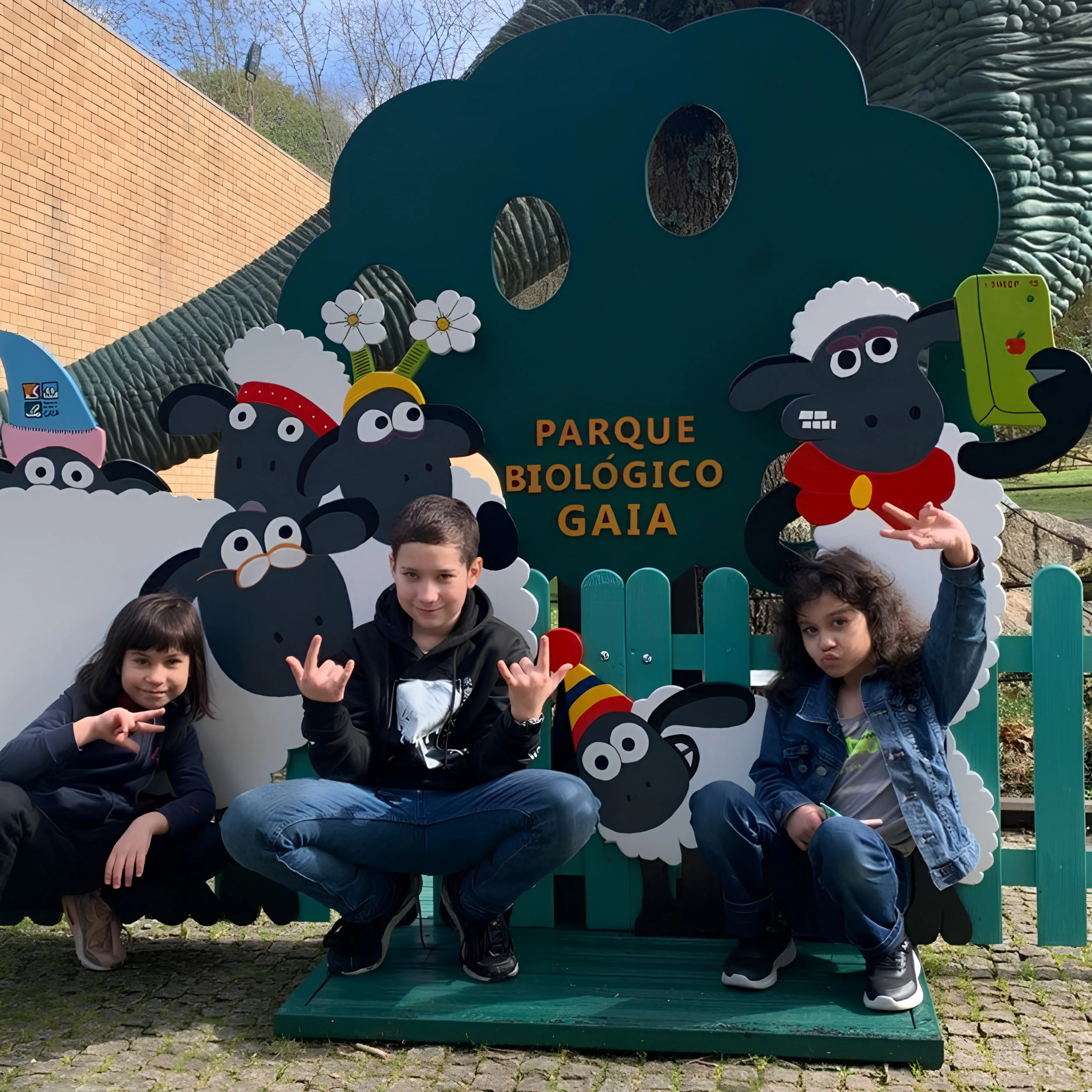
A photograph taken on 11 March at 11:16 a.m. has survived. It shows three of our younger children posing at the entrance to Parque Biológico de Gaia. After everything they had been through, they could simply be children again.
We spent the next ten days in Curvos, Esposende, almost like being on holiday.
An incredibly beautiful area. A comfortable house. And plenty of food delivered to us three times a day.
Meanwhile, the municipality of Esposende was preparing an apartment for us.
On 21 March, we moved into our new home.
People Who Gave a Part of Themselves#
There is one more episode I want to preserve.
One day, when our food supplies had run out (in fact, we had had no supplies left since Germany), we bought the children a large meal at Burger King at a railway station in France. It cost us more than 40 euros. That was a considerable amount for us, as we were not accustomed to spending so much on a single meal.
But almost immediately afterwards, something unexpected happened.
On a French train, an elderly woman was about to leave our carriage when she decided to give us 50 euros.
The children ran up to her and gave her our one-hryvnia coin — a Ukrainian hryvnia as a souvenir.
It was a small exchange between strangers. But we still remember it.
Overall, our journey to Portugal and most of our food were provided through the help of other people. We were helped by volunteers, charitable organisations, private families, and public institutions.
Sometimes we did not even know the names of the people helping us. We did not always know where they had come from, who had organised the next stage of our journey, or who they had called to make sure someone would meet us at our train carriage again and again and find somewhere for us to rest.
But they were there when we needed them.
21 March. A New Home#
We left Kyiv on 4 March.
Seventeen days later, on 21 March 2022, we found ourselves in our new home in Esposende.
We travelled through Ukraine, Moldova, Romania, Hungary, Austria, Germany, France, Spain, and Portugal. We spent seven days on the road, without stopping anywhere for a longer stay, in order to reach Portugal as quickly as possible.
And we still did not know how our lives would unfold.
We had our documents, personal belongings, two dogs, and one another.
My brother had helped us find the courage to leave. My husband, who had initially planned only to accompany the family, eventually stayed with us. The children made it through the journey far more resiliently than we could have expected. And the dogs tried very hard to remain unnoticed, so as not to cause us any extra trouble.
We did not know how long the war would last. We did not know when we would return. We did not know what awaited us in our new country.
But I knew that I had done everything I could to prevent the war from physically harming our children.
I certainly did not want to hear one day a child ask me why I had not used the opportunity to change something while that opportunity still existed.
Now, looking back, I know that I did the most important thing — I did not postpone the decision.
Sometimes responsibility for the future means exactly that: not waiting until it is too late.
Alt-text 1:
Family documents arranged over a map of Europe: five blue Ukrainian international passports, three blue certificates for children from a large family, one red certificate for the parents of a large family, and two international veterinary passports for the dogs. Nearby are a mobile phone in a leather book-style case, a warm scarf, a pen, and a compass. These were among the documents and personal belongings the family took when leaving Kyiv in March 2022.
Alt-text 2:
A black Panasonic RX-CT800 double cassette recorder fitted into a purpose-built niche in the kitchen cabinetry. A microwave with dark glass doors is positioned above it, alongside frosted-glass cabinet fronts and glossy yellow-beige cupboards. The family bought this cassette recorder shortly after their wedding in 1995. It was still working 27 years later. The owner sometimes listened to the radio while preparing meals at the other end of the kitchen.
Alt-text 3:
Three of the family’s younger children standing at the entrance to Parque Biológico de Gaia in Vila Nova de Gaia, Portugal. The photograph was taken at 11:16 a.m. on 11 March 2022, the morning after the police helped the family find overnight accommodation at the park following their arrival in Porto. After a long journey from Kyiv through several European countries, the children had finally reached a place of safety.
Emigration: Responsibility for the Future | Life Reconfigured. AP | Pivtorak.Studio. 15.11.2026
© Anna Pivtorak (Kostyuk)