Pivtorak.Studio · Contemporary conceptual practice

Anna Pivtorak · Independent Researcher

Governance systems · Cultural capital · Visual analytics · Structuring meanings

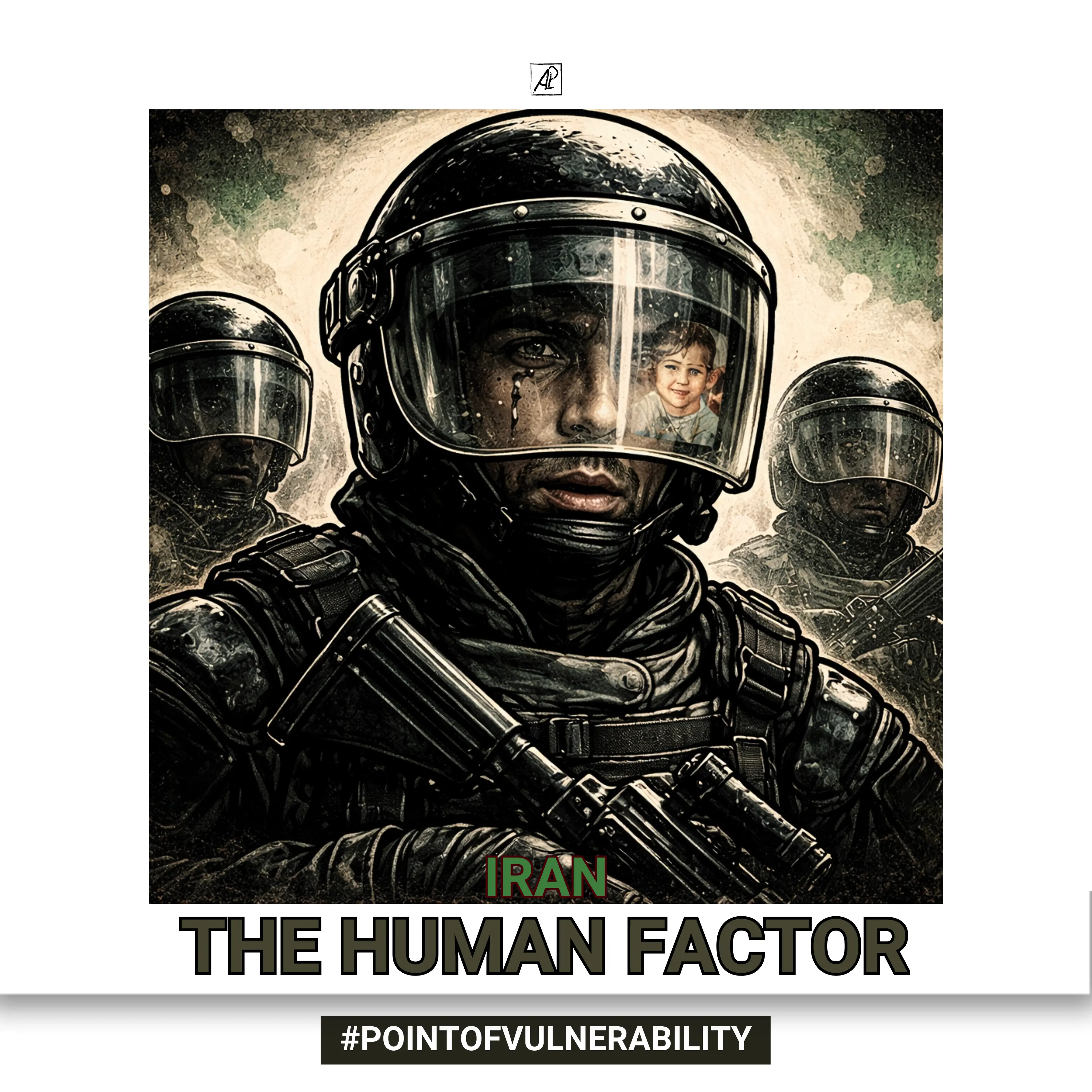
Face of an Iranian security officer wearing a helmet. Through the transparent visor, a tear or a photograph of his child. He stands in formation holding a weapon, surrounded by other officers.

04-01 Vulnerability Point. Human Factor

This work diagnoses the fragility of authoritarian regimes through the conscience of their executors. Even the most disciplined apparatus cannot fully suppress humanity. A single moment of doubt may become the beginning of systemic collapse.
A giant rusted repression machine. Instead of lubricant, thousands of unpaid bills, receipts, and debt papers clog the mechanism. Screws smoke and grind from friction as the system operates at the brink of collapse.

04-02 Vulnerability Point. Economic Overload

This work diagnoses the economic overload of authoritarian rule. Repression consumes resources without creating value, and the regime gradually exhausts its own foundations. Tyranny eventually becomes more expensive than society can sustain.
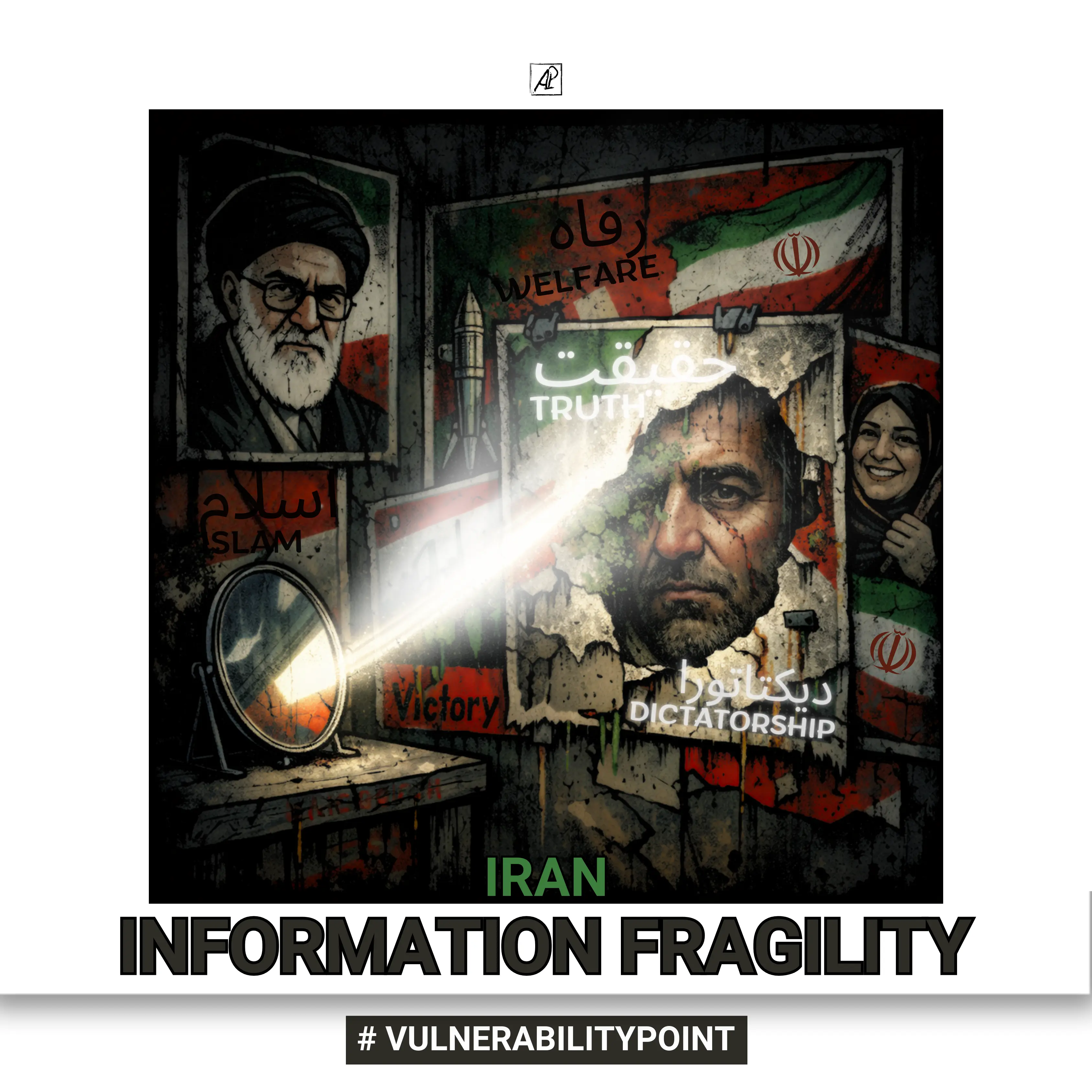
A dark room with walls fully covered in ideological posters. A small mirror reflects a ray of sunlight onto a poster. Where the light hits, the paint fades, revealing mold, rusty nails, and a tired human face beneath the paper.

04-03 Vulnerability Point. Informational Fragility

This work diagnoses the informational vulnerability of authoritarian rule. Propaganda survives only while reality cannot be compared. Once people regain access to independent sources of truth, the ideological façade begins to collapse.
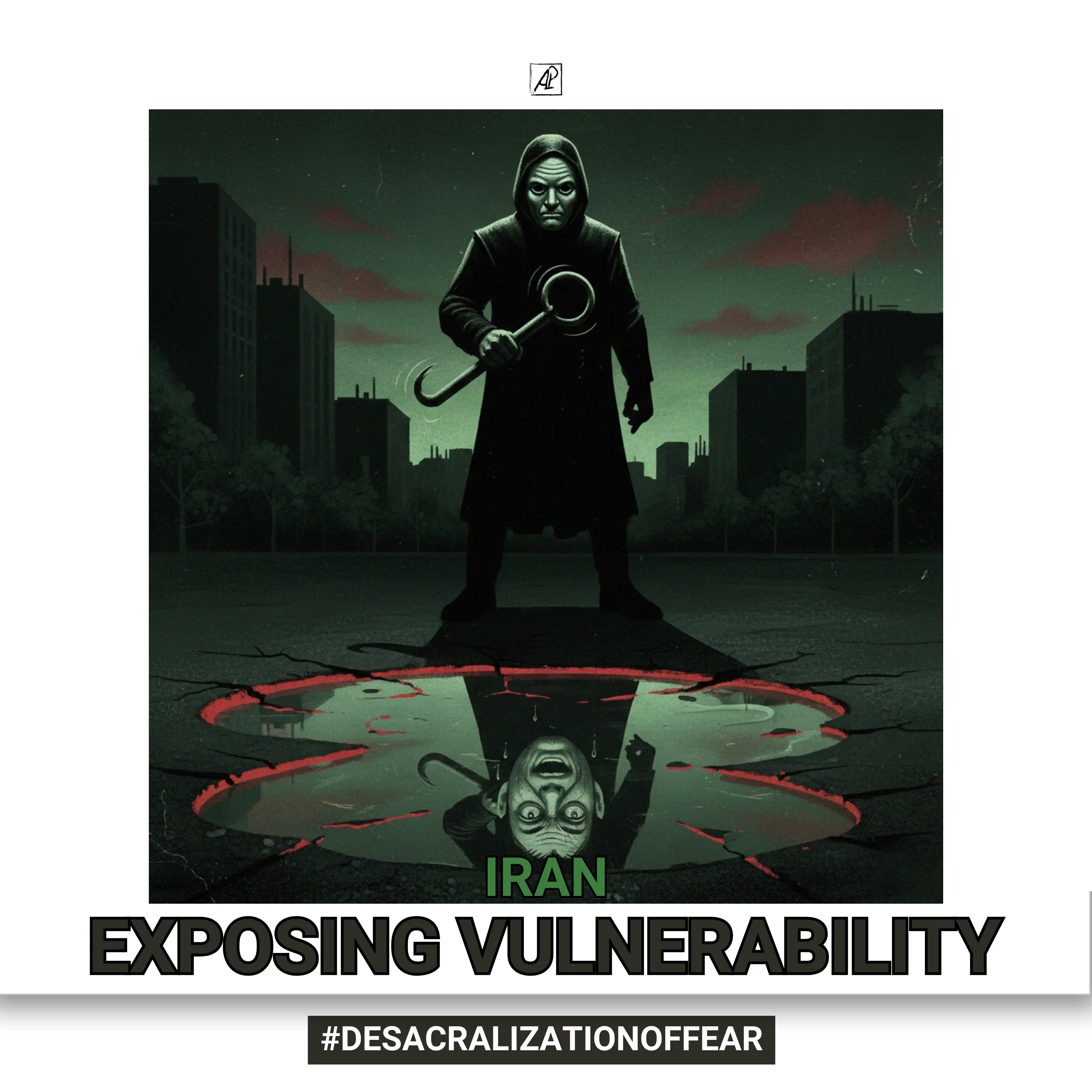
A deserted city at night. A hooded figure stands beside a puddle reflecting an enlarged frightened face and a trembling hand. Red tones surround the puddle. Grotesque style.

06-01 Desacralization of Fear. Exposing Vulnerability

This work documents the desacralization of fear as a civilizational turning point. A trembling hand reflected in a puddle exposes the hidden fragility of authoritarian violence and reveals that repressive systems are sustained by circulating fear rather than genuine strength.
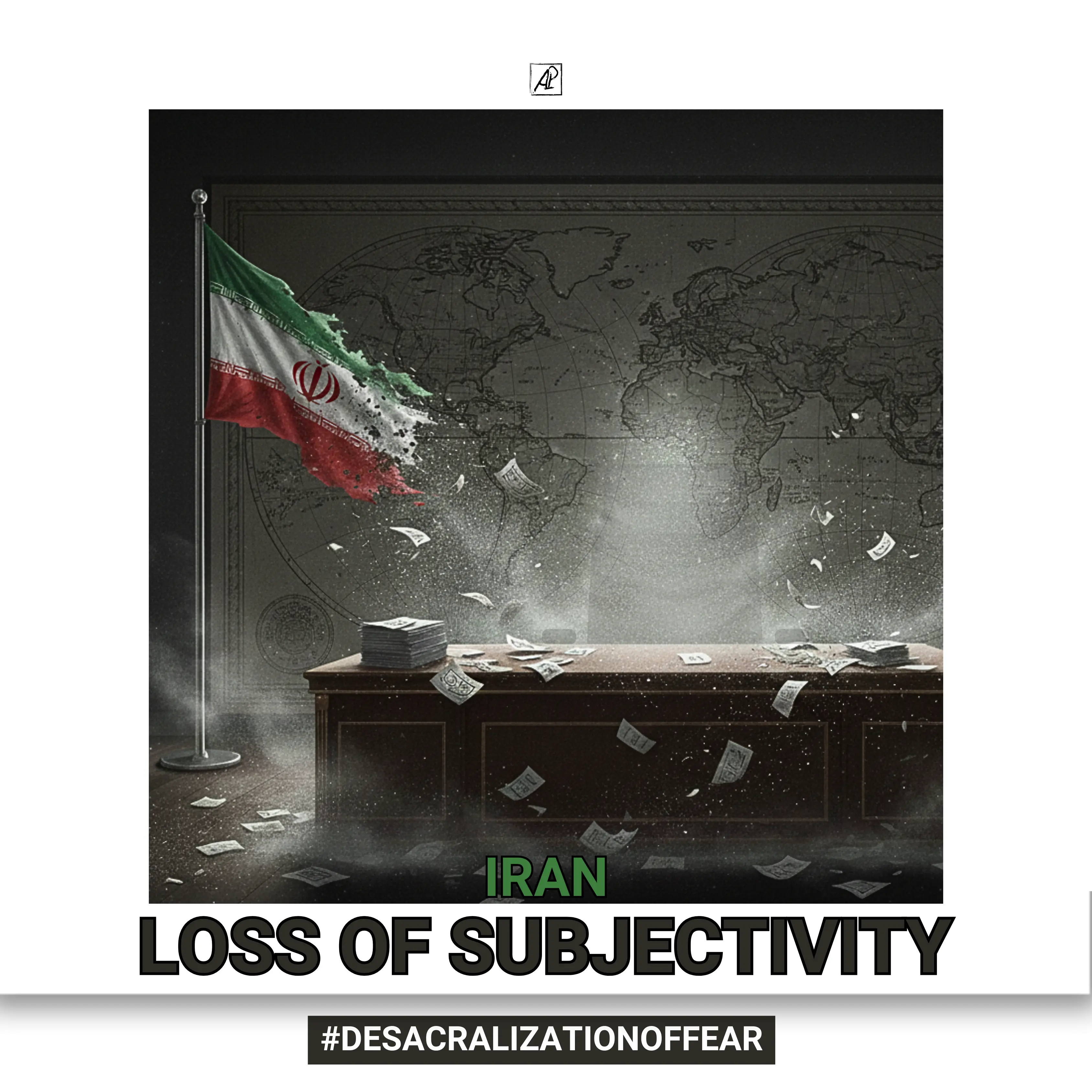
An empty Iranian presidential office with a dusty desk, scattered orders, a dissolving chair, and a flag disintegrating into dust. No people present.

06-02 Desacralization of Fear. Loss of Subjectivity

This work documents the dissolution of authoritarian subjectivity as a civilizational turning point. An empty office, fading symbols, and weightless orders reveal that dictatorship exists only while people participate in its relational network.
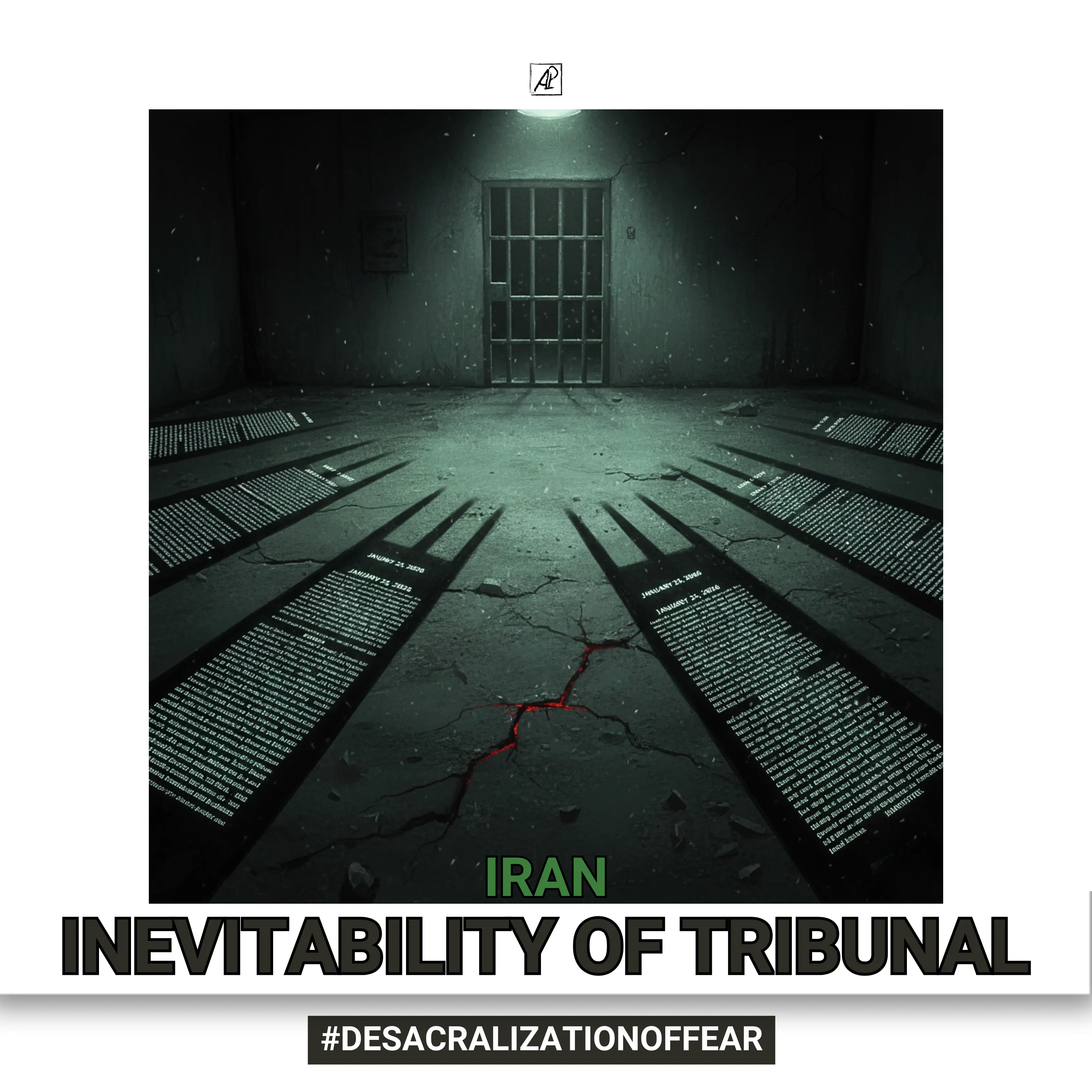
A dark prison cell where shadows of prison bars form lines resembling a legal protocol. The floor is cracked and a central fissure glows red from within.

06-03 Desacralization of Fear. Inevitability of Tribunal

This work documents the final stage of the desacralization of fear. Prison bars become legal protocols, victims become witnesses, and dictatorship loses its ability to conceal violence as history itself begins to register every act.